Cybersecurity Challenges Facing the USA in 2026
Introduction
As technology continues to evolve, cybersecurity has become one of the most critical concerns for governments, businesses, and individuals across the United States. In 2026, the country faces a rapidly changing cyber threat landscape driven by advances in artificial intelligence, cloud computing, remote work environments, and interconnected digital systems. While technological innovation offers numerous benefits, it also creates new opportunities for cybercriminals to exploit vulnerabilities.
Cyberattacks are becoming more sophisticated, frequent, and costly. From ransomware attacks targeting businesses to data breaches affecting millions of consumers, cybersecurity challenges continue to grow. Protecting sensitive information, critical infrastructure, and national security remains a top priority for the United States.
The Growing Threat of Ransomware
Ransomware remains one of the most dangerous cybersecurity threats facing America in 2026. In a ransomware attack, cybercriminals encrypt a victim’s data and demand payment in exchange for restoring access. These attacks target organizations of all sizes, including hospitals, schools, government agencies, and private companies.
The financial impact of ransomware attacks can be devastating. Businesses often face operational disruptions, data loss, reputational damage, and significant recovery costs. As attackers adopt more advanced techniques and use artificial intelligence to automate attacks, ransomware threats continue to evolve.
Organizations are increasingly investing in backup systems, employee training, and advanced security solutions to reduce the risk of ransomware incidents.
Artificial Intelligence-Powered Cyberattacks
Artificial intelligence (AI) is transforming many industries, but it is also creating new cybersecurity challenges. Cybercriminals are using AI tools to develop more effective phishing campaigns, identify system vulnerabilities, and automate attacks on a larger scale.
AI-generated emails and messages can closely mimic legitimate communications, making it more difficult for employees and consumers to recognize scams. Attackers can also use AI to analyze security systems and adapt their methods in real time.
While AI can strengthen cybersecurity defenses, organizations must stay ahead of malicious actors who are leveraging the same technology for harmful purposes.
Data Breaches and Privacy Concerns
Data breaches remain a major concern in the United States. Businesses collect vast amounts of customer information, including personal details, financial records, and healthcare data. When cybercriminals gain unauthorized access to these databases, sensitive information can be exposed or sold on the dark web.
Large-scale breaches can affect millions of individuals and lead to identity theft, financial fraud, and loss of trust. As businesses continue to expand their digital operations, protecting customer data has become more important than ever.
Companies must implement strong encryption, access controls, and monitoring systems to safeguard sensitive information and comply with evolving privacy regulations.
Protecting Critical Infrastructure
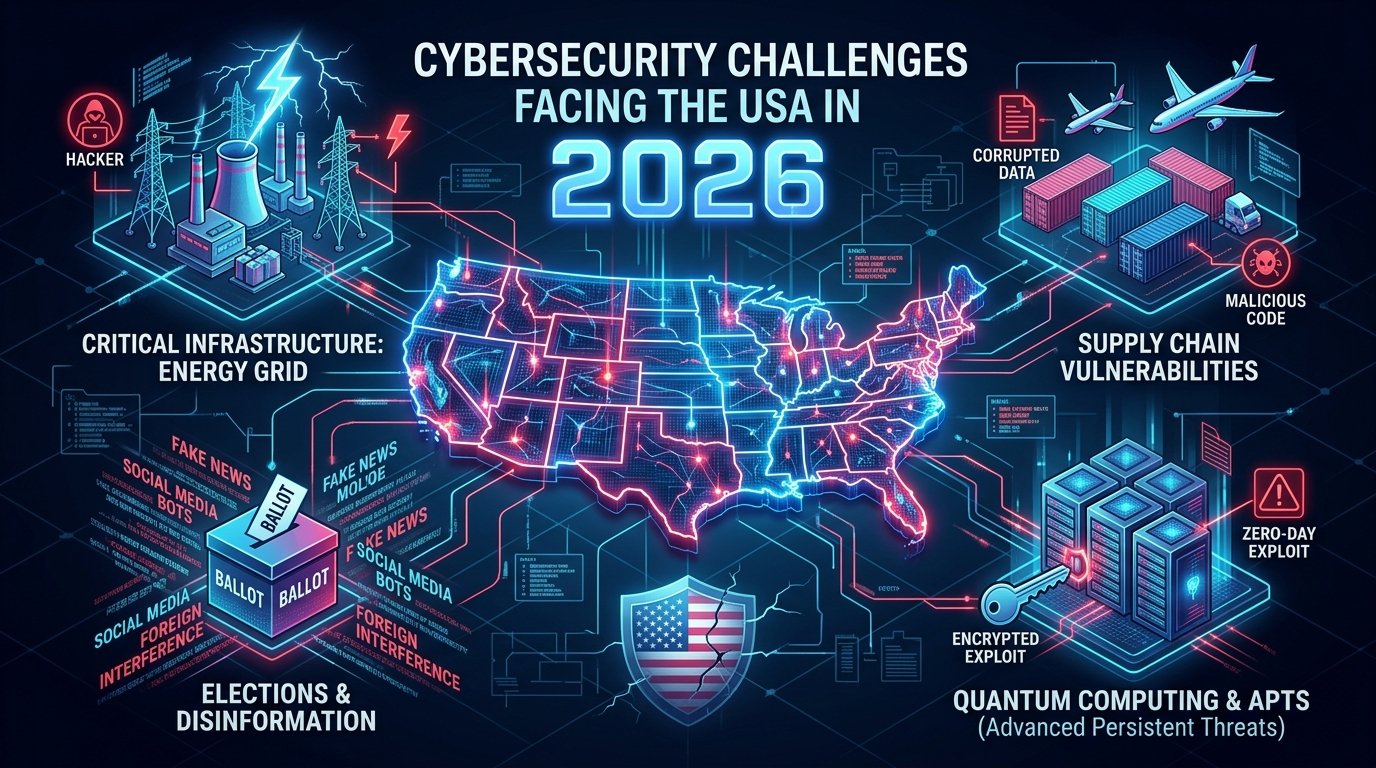
Critical infrastructure systems are increasingly connected to digital networks, making them attractive targets for cyberattacks. These systems include power grids, water treatment facilities, transportation networks, healthcare institutions, and communication services.
A successful cyberattack on critical infrastructure could disrupt essential services, cause economic damage, and threaten public safety. Nation-state actors and organized cybercriminal groups often target these systems due to their strategic importance.
Government agencies and private organizations are working together to strengthen cybersecurity measures, improve threat detection, and develop rapid response plans to protect critical infrastructure from emerging threats.
Challenges of Remote and Hybrid Work
Remote and hybrid work models have become common across the United States. While these arrangements offer flexibility and productivity benefits, they also introduce new cybersecurity risks.
Employees frequently access company networks from home offices, public Wi-Fi networks, and personal devices. These environments may not have the same security protections as traditional office networks.
Cybercriminals often exploit remote work vulnerabilities through phishing attacks, weak passwords, and unsecured devices. Organizations must implement multi-factor authentication, endpoint security solutions, and employee awareness programs to maintain a secure remote workforce.
Cloud Security Risks
Cloud computing has become essential for modern businesses, enabling organizations to store data and run applications online. However, increased reliance on cloud services has created additional security challenges.
Misconfigured cloud environments, weak access controls, and insecure application programming interfaces (APIs) can expose sensitive information to cyber threats. As businesses migrate more operations to the cloud, ensuring proper security practices becomes increasingly important.
Organizations must regularly audit cloud systems, monitor access activity, and implement strong security policies to protect their digital assets.
Supply Chain Cybersecurity Threats
Many businesses depend on third-party vendors, software providers, and service partners to operate efficiently. Unfortunately, cybercriminals often target these relationships to gain access to larger networks.
Supply chain attacks can spread malware, compromise software updates, or exploit vulnerabilities in vendor systems. Because organizations are interconnected, a single security weakness can affect multiple companies.
Businesses are placing greater emphasis on vendor risk assessments, security audits, and continuous monitoring to reduce supply chain cybersecurity risks.
The Cybersecurity Skills Shortage
One of the biggest challenges facing the United States is the shortage of qualified cybersecurity professionals. As cyber threats become more complex, organizations need skilled experts to monitor systems, respond to incidents, and develop effective security strategies.
However, demand for cybersecurity talent continues to exceed supply. Many businesses struggle to fill critical security positions, leaving gaps in their defenses.
Educational institutions, government programs, and private organizations are investing in cybersecurity training and workforce development initiatives to address this growing shortage.
Emerging Threats from the Internet of Things (IoT)
The number of connected devices continues to grow rapidly. Smart homes, wearable devices, industrial sensors, and connected vehicles all contribute to the expanding Internet of Things (IoT) ecosystem.
While IoT technology improves convenience and efficiency, it also increases the number of potential entry points for cyberattacks. Many connected devices have limited security features, making them attractive targets for hackers.
Organizations must ensure that IoT devices are properly secured, regularly updated, and monitored for suspicious activity to reduce potential risks.
Strengthening America’s Cyber Defenses
To address these growing cybersecurity challenges, organizations across the United States are adopting more comprehensive security strategies. These include:
- Implementing multi-factor authentication.
- Conducting regular security assessments.
- Training employees on cybersecurity best practices.
- Investing in advanced threat detection technologies.
- Developing incident response and recovery plans.
- Strengthening partnerships between government and private sectors.
A proactive approach to cybersecurity can help organizations reduce risks and respond more effectively when incidents occur.
Conclusion
Cybersecurity remains one of the most significant challenges facing the USA in 2026. The rise of ransomware, AI-powered attacks, cloud security risks, data breaches, and threats to critical infrastructure highlights the need for stronger digital defenses. As technology continues to evolve, cybercriminals will continue developing new methods to exploit vulnerabilities.
To stay secure, businesses, government agencies, and individuals must prioritize cybersecurity investments, adopt modern security practices, and remain vigilant against emerging threats. By building resilient cyber defenses, the United States can better protect its economy, critical infrastructure, and digital future in an increasingly connected world.