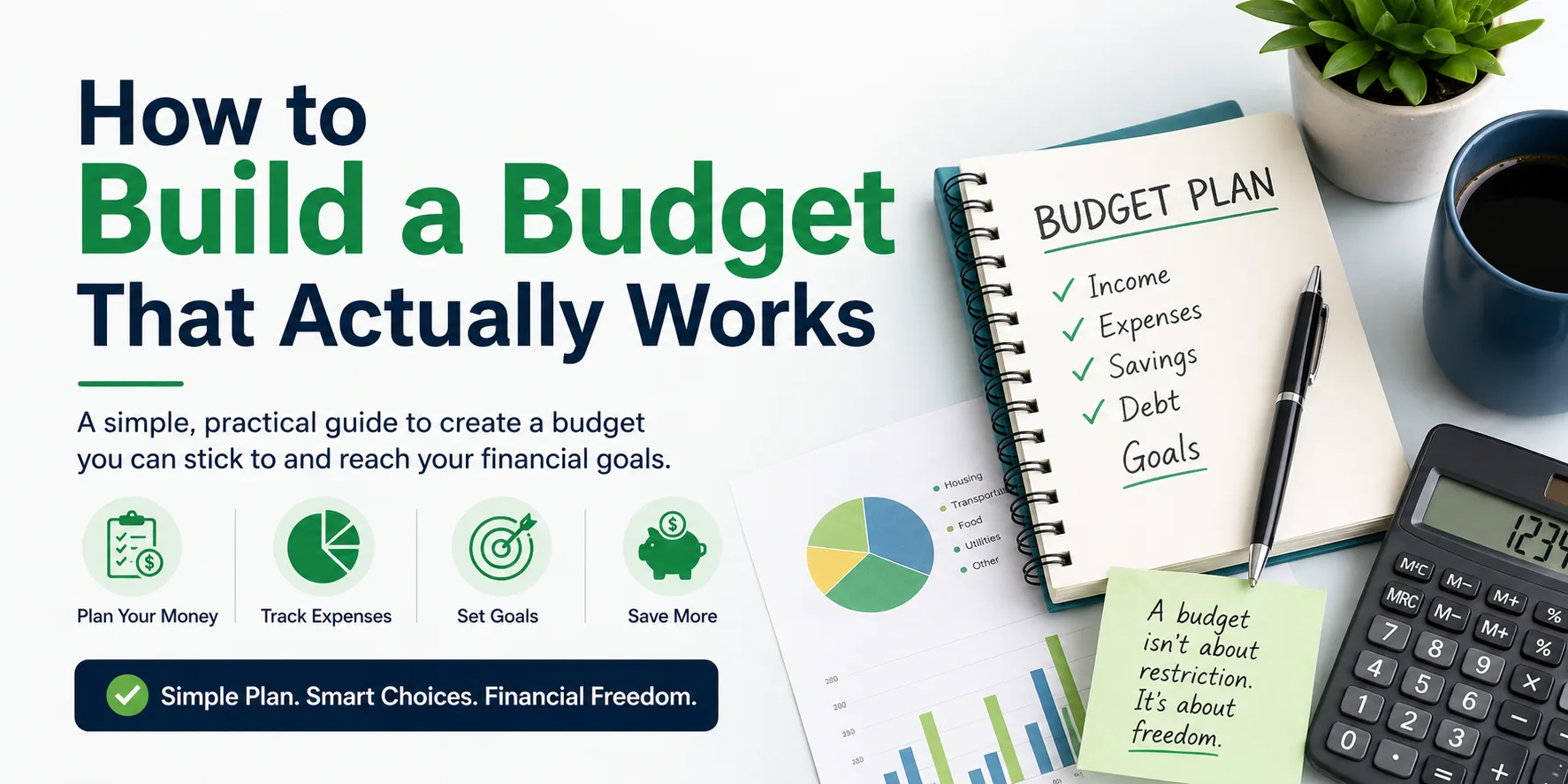
Budgeting for Beginners: How to Make a Budget That Actually Works
The word “budget” makes many people uncomfortable. It sounds restrictive — like a financial diet that strips away all the fun from life. But in reality, a budget is the exact opposite. A budget is freedom. It is a plan that tells your money where to go, so you are never left wondering where it went.
Without a budget, most people operate on a hope-and-spend strategy — earning money, spending it on whatever feels urgent or tempting, and hoping enough is left at the end of the month. Spoiler: there rarely is.
A budget does not restrict your life. It funds it. It is the difference between accidentally running out of money and deliberately building the life you want. This article will show you exactly how to create a budget that works — and actually stick to it.
- WHY MOST PEOPLE AVOID BUDGETING
Before building a budget, it helps to understand why so many people resist it.
The most common reasons:
- “I do not earn enough to budget.” — In reality, budgeting is most important when money is tight.
- “It is too complicated.” — A good budget can be set up in under an hour.
- “I tried before and failed.” — Most people fail because they use the wrong system, not because budgeting does not work.
- “It will show me how bad things are.” — Yes, it might. But knowing is the only way to fix it.
Budgeting is not about perfection. It is about awareness and intention. Even an imperfect budget beats no budget every single time.
- STEP ONE — CALCULATE YOUR TOTAL INCOME
The foundation of any budget is knowing exactly how much money comes in each month. This includes:
- Your primary salary or wages (after tax)
- Any freelance or side income
- Rental income
- Business profits
- Any other regular inflows
If your income varies month to month, use your lowest average month as your baseline. It is always better to budget conservatively and have money left over than to overestimate and fall short.
Write down your total monthly income as a single number. This is your budget’s starting point.
- STEP TWO — LIST ALL YOUR EXPENSES
Now list every expense you have in a typical month. Be thorough and honest. Most people underestimate their spending significantly.
Divide expenses into two categories:
FIXED EXPENSES — These are the same every month:
- Rent or mortgage
- Loan or debt repayments
- Utility bills (electricity, gas, water)
- Internet and phone bills
- Insurance premiums
- School or tuition fees
VARIABLE EXPENSES — These fluctuate each month:
- Groceries and food
- Transport and fuel
- Clothing and personal care
- Entertainment and dining out
- Medical expenses
- Gifts and miscellaneous spending
Go through your bank statements and receipts from the last three months to get accurate figures. Most people are genuinely surprised by what they find.
- STEP THREE — SUBTRACT EXPENSES FROM INCOME
Once you have your income and all your expenses listed, do the simple math:
Total Income − Total Expenses = Your Monthly Surplus or Deficit
If the result is positive, congratulations — you have money available to save and invest. The goal is to maximize this number.
If the result is negative, do not panic. This is exactly why you needed a budget — you have now identified the problem clearly. The next step is to close that gap by reducing expenses, increasing income, or both.
- POPULAR BUDGETING METHODS
There is no single “correct” way to budget. Different methods work for different personalities. Here are three of the most effective:
THE 50/30/20 RULE
Divide your after-tax income into three buckets:
- 50% for needs (rent, food, transport, utilities)
- 30% for wants (dining out, entertainment, shopping)
- 20% for savings and debt repayment
This method is simple, flexible, and works well for most people with a stable income.
ZERO-BASED BUDGETING
Every rupee of income is assigned a specific job until you reach zero. This does not mean you spend everything — it means every rupee is allocated, whether to expenses, savings, or investments. This method gives you total control and visibility over every single rupee.
Best for: Detail-oriented people who want maximum control.
THE ENVELOPE METHOD
Withdraw cash and divide it into labeled envelopes for each spending category — groceries, transport, entertainment, etc. When an envelope is empty, that category is done for the month. No exceptions.
Best for: People who overspend on cards and need a physical, tangible system to control spending.
Choose the method that fits your lifestyle. The best budget is the one you will actually use.
- THE IMPORTANCE OF A BUDGET CATEGORY MOST PEOPLE FORGET
Almost every budget template includes rent, food, and transport. But there is one category that most people forget — and it destroys budgets every single month.
Irregular expenses.
These are costs that do not come every month but are entirely predictable:
- Eid shopping and gifts
- Annual insurance premiums
- School admissions or exam fees
- Car maintenance and registration
- Medical or dental check-ups
- Weddings and family events
The trick is to estimate the annual total for all these expenses, divide by 12, and set aside that amount every month into a separate account. When the expense arrives, the money is already waiting. No budget shock, no emergency borrowing.
This single habit can eliminate the most common reason budgets fail.
- HOW TO ACTUALLY STICK TO YOUR BUDGET
Creating a budget is the easy part. The real challenge is following it consistently. Here is how to make it stick:
REVIEW YOUR BUDGET WEEKLY
Spend ten minutes each week checking your spending against your budget. Catching overspending early allows you to correct it before it gets out of hand.
GIVE YOURSELF A SPENDING ALLOWANCE
Budgets fail when they are too restrictive. Allow yourself a reasonable personal spending amount each month — money you can spend on anything without guilt. This pressure valve prevents the “all or nothing” mentality that derails most budgets.
USE TECHNOLOGY
Budgeting apps make tracking effortless. Many apps connect to your bank account and automatically categorize every transaction. You can see exactly where you stand at any moment.
BUDGET AS A FAMILY
If you share finances with a spouse or family members, budget together. Financial disagreements are one of the leading causes of stress in households. A shared budget creates shared responsibility and mutual accountability.
EXPECT IMPERFECT MONTHS
You will go over budget sometimes. That is normal. Do not use one bad month as a reason to abandon the entire system. Adjust, learn, and continue.
- WHAT A GOOD BUDGET MAKES POSSIBLE
A working budget is not the end goal — it is the tool that makes every other financial goal achievable. With a solid budget:
- You eliminate financial stress and uncertainty.
- You always know exactly where you stand financially.
- You consistently save and invest every month.
- You build an emergency fund that protects you from life’s surprises.
- You pay off debt faster and avoid creating new debt.
- You work toward big life goals with clarity and confidence.
Money managed with intention grows. Money spent without a plan disappears.
CONCLUSION
A budget is not a punishment. It is permission — permission to spend on what truly matters to you, guilt-free, because you know your bills are paid, your savings are growing, and your future is being taken care of.
Start simple. Start imperfect. Start today. Pick any of the methods described in this article, spend one hour setting up your first budget, and commit to reviewing it for just one month.
One month of intentional money management can change everything. And once you experience the clarity and confidence that comes with knowing exactly where your money is going, you will never want to go back to guessing.