
Introduction
New Education Policies
Education plays a central role in the social and economic development of Punjab. With millions of students enrolled in public and private schools across the province, improvements in the school education system can have a long-term impact on the future of Pakistan. As we move through 2026, education in Punjab is increasingly focused on improving learning outcomes, expanding the use of technology, strengthening teachers, and making education more accessible to students from different backgrounds.
The education sector is also changing because of the growing importance of digital learning, artificial intelligence, modern skills, critical thinking, and practical education. Schools are no longer expected to focus only on textbook-based learning. Students need skills that can help them continue their education, enter the job market, and adapt to a rapidly changing world.
The new education direction in Punjab during 2026 can therefore be understood through several important areas, including curriculum improvement, digital education, teacher training, student assessment, school infrastructure, girls’ education, technical skills, and the use of modern technology in classrooms.
Focus on Improving the Quality of Education
One of the most important priorities for Punjab schools is improving the overall quality of education. Simply increasing school enrollment is not enough if students are unable to develop strong reading, writing, mathematics, science, and problem-solving skills.
Schools are increasingly expected to focus on learning outcomes rather than only completing textbooks. Teachers can play a major role by identifying students who are struggling and providing additional support.
A stronger focus on foundational learning can help students develop basic academic skills at an early age. Reading comprehension, mathematics, communication, and logical thinking are particularly important because these skills support learning in almost every subject. New Education Policies
The education system can also benefit from regular monitoring of student performance. Instead of waiting until annual examinations, schools can use classroom assessments, quizzes, assignments, and other methods to understand student progress throughout the academic year.
Digital Education in Punjab Schools
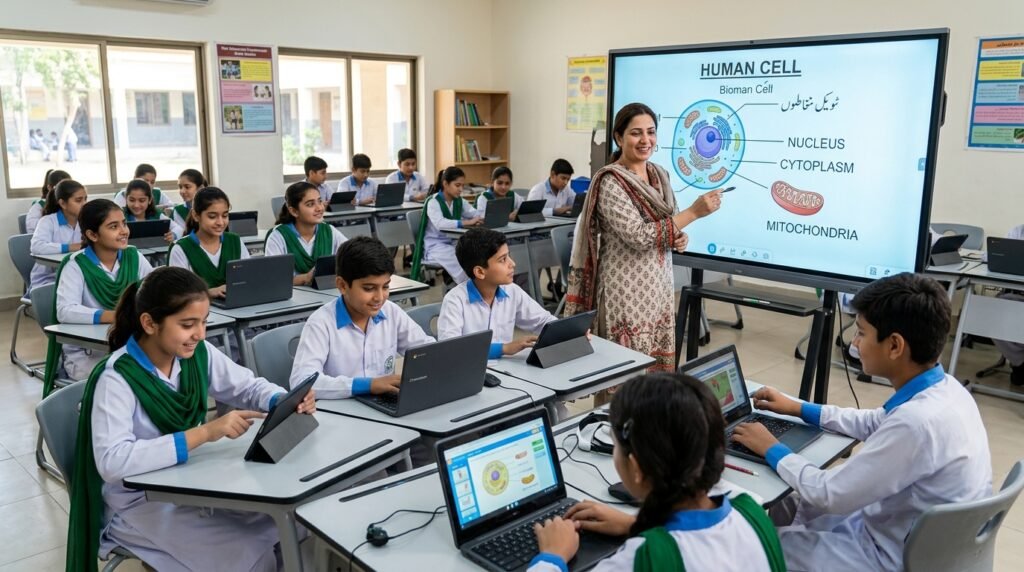
Technology is becoming an increasingly important part of education in 2026. Smartphones, computers, tablets, internet services, digital learning platforms, and multimedia resources can provide students with access to educational material beyond traditional textbooks.
Digital education can be especially useful for subjects such as science, mathematics, computer studies, and languages. Videos, animations, interactive lessons, and online exercises can make difficult concepts easier for students to understand. New Education Policies
However, technology should not replace teachers. Instead, it should support teachers by providing additional learning resources and allowing students to explore subjects in different ways.
For Punjab, one of the major challenges is the digital divide. Students in urban areas may have better access to computers and high-speed internet than students in remote or rural areas. Any digital education strategy therefore needs to consider students who have limited access to technology.
Greater Use of Artificial Intelligence in Education
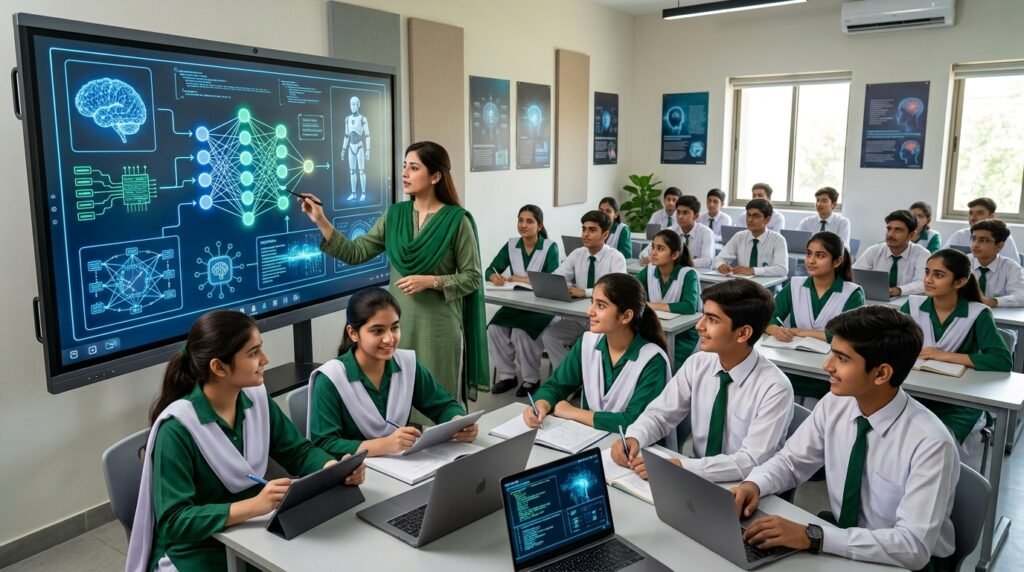
Artificial intelligence is one of the major technological developments influencing education around the world in 2026. New Education Policies
AI-based educational tools can potentially help students with personalized learning, practice exercises, language learning, and basic academic support. Teachers can also use technology to prepare lessons, organize educational resources, and identify areas where students need additional assistance.
However, schools need to introduce AI responsibly. Students should understand that AI tools are learning assistants rather than replacements for independent thinking.
Schools can also teach students about responsible technology use, online safety, information verification, privacy, and academic honesty. These skills are becoming increasingly important as students encounter large amounts of AI-generated and online information.
The goal should be to create students who can use technology intelligently while still developing creativity, reasoning, communication, and independent decision-making skills.
Curriculum Modernization
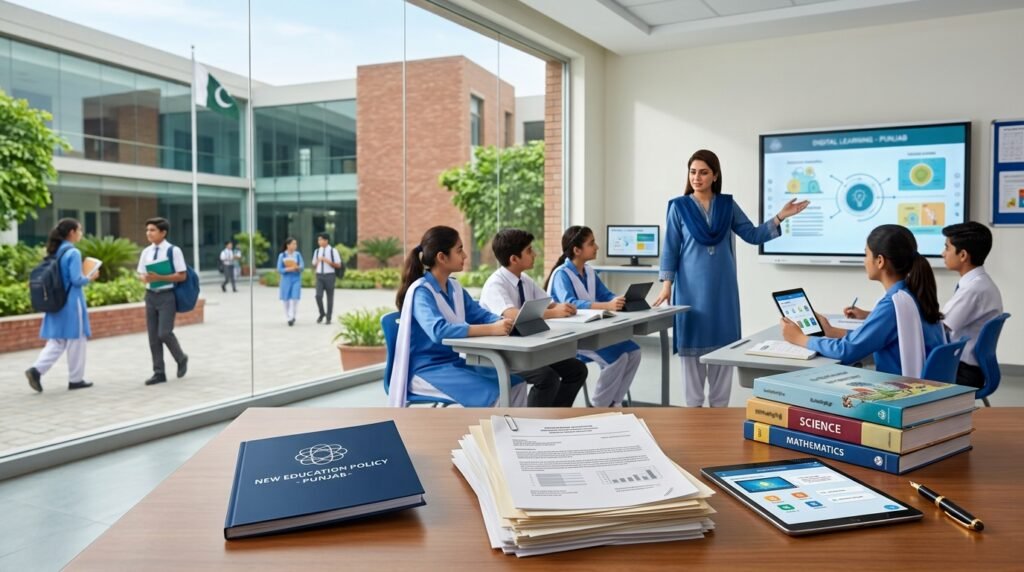
Another important area of education reform is curriculum development. New Education Policies
Traditional education often places considerable emphasis on memorization. Modern education increasingly requires students to understand concepts, apply knowledge, solve problems, and communicate ideas.
A modern curriculum can include greater emphasis on:
- Critical thinking
- Problem-solving
- Communication skills
- Digital literacy
- Financial literacy
- Science and technology
- Environmental awareness
- Creativity
- Practical skills
- Career awareness
Curriculum improvement does not mean removing traditional subjects. Instead, subjects can be taught using more practical and engaging methods.
For example, mathematics can be connected with real-life financial calculations, while science can include experiments and practical activities. English and Urdu classes can focus not only on grammar but also on communication and writing skills.
Changes in Student Assessment
Examinations remain an important part of the education system, but modern education increasingly recognizes the importance of continuous assessment. New Education Policies
Students should have opportunities to demonstrate their knowledge through classroom activities, projects, presentations, practical work, and assignments.
Continuous assessment can help teachers understand whether students actually understand a topic or are simply memorizing information for examinations.
A balanced assessment system can therefore include both examinations and classroom-based evaluation.
The objective should be to measure knowledge, understanding, application, and problem-solving rather than memorization alone.
Teacher Training and Professional Development
No education policy can succeed without qualified and motivated teachers. New Education Policies
Teachers are responsible for converting curriculum and education policies into actual classroom experiences. Therefore, teacher training is expected to remain an important area of education improvement in Punjab.
Modern teacher training can focus on:
- Classroom management
- Modern teaching techniques
- Digital tools
- Student-centered learning
- Inclusive education
- Assessment methods
- Child psychology
- Communication skills
- Artificial intelligence and educational technology
Teachers also need opportunities to update their knowledge throughout their careers. Professional development should not be limited to occasional workshops. Continuous learning can help teachers understand new teaching methods and technologies. New Education Policies
Student-Centered Learning
A student-centered education system focuses on the needs, abilities, interests, and learning levels of individual students.
Every classroom contains students with different learning abilities. Some students understand concepts quickly, while others need additional explanation and practice.
Teachers can use different teaching strategies to support these differences. Group activities, individual assignments, classroom discussions, practical exercises, and technology-based learning can provide students with multiple ways to understand a subject.
This approach can also encourage students to participate more actively in the classroom.
Instead of simply listening to lectures, students can ask questions, conduct activities, discuss ideas, and solve problems.
Expansion of Skills-Based Education
The job market is changing rapidly, and students need more than academic qualifications. New Education Policies
Schools can gradually introduce students to practical and career-related skills. Depending on the age group, students can learn basic computer skills, communication, entrepreneurship, financial awareness, digital literacy, and other useful abilities.
Technical and vocational education can also help older students understand different career pathways.
Skills-based learning can be particularly valuable for students who may not immediately pursue traditional university education. Technical skills can provide alternative opportunities in areas such as information technology, design, electronics, agriculture, business, and other industries.
Improving Girls’ Education
Girls’ education remains an important part of Punjab’s educational development.
Providing safe, accessible, and quality education to girls can have significant social and economic benefits. Educated girls are more likely to participate in higher education and skilled employment and can contribute positively to their families and communities.
Education policies therefore need to consider issues such as school accessibility, safe transportation, appropriate school facilities, trained teachers, sanitation, and continuation of education after primary and middle school. New Education Policies
Encouraging girls to study science, technology, mathematics, computing, and other professional subjects can also expand their future opportunities.
Better School Infrastructure
Education quality is also connected with the physical environment in which students study.
Schools need safe classrooms, clean drinking water, sanitation facilities, electricity, libraries, laboratories, playgrounds, and appropriate furniture.
Digital infrastructure is becoming increasingly important as well. Schools using technology need reliable electricity, internet connectivity, computers, projectors, and other equipment.
Rural and underserved schools may require additional investment to bring their facilities closer to the standards available in larger cities.
Inclusive Education
A modern education system should provide opportunities for students with different needs and backgrounds. New Education Policies
Inclusive education means creating an environment where students with disabilities and learning difficulties can participate in education as effectively as possible.
Schools may need trained teachers, accessible buildings, suitable learning materials, assistive technologies, and individualized support.
Inclusive education can also help students develop empathy, cooperation, and respect for people with different abilities.
Environmental and Climate Education
Environmental issues are becoming increasingly relevant to education.
Students can be taught about climate change, pollution, water conservation, waste management, tree plantation, energy conservation, and environmental responsibility.
Schools can turn these topics into practical activities. Students can participate in tree-planting campaigns, recycling projects, school gardens, cleanliness activities, and water-saving initiatives.
Such activities can help students understand that education is connected with real-world problems.
Digital Safety and Online Awareness
As children spend more time using smartphones and the internet, digital safety is becoming an important educational issue. New Education Policies
Students should learn how to protect their personal information, recognize suspicious links, avoid online scams, create secure passwords, and behave responsibly on social media.
Schools can also teach students how to evaluate online information. Not everything published on the internet is accurate.
This is particularly important in an era when artificial intelligence can produce realistic text, images, videos, and other content.
Digital literacy should therefore become an important part of modern education.
Reducing the Education Gap Between Urban and Rural Areas
One of the major challenges for Punjab is ensuring that students in rural and less-developed areas receive quality education comparable to students in major cities. New Education Policies
Urban schools may have greater access to experienced teachers, technology, laboratories, libraries, and other resources.
Education reforms should therefore focus on reducing these differences.
Investment in rural schools, teacher deployment, digital learning resources, transportation, school facilities, and community participation can help improve educational opportunities outside major urban centers.
Role of Parents in the New Education System
Parents are important partners in education. New Education Policies
Schools can improve communication with parents through meetings, digital communication platforms, progress reports, and regular feedback.
Parents should be encouraged to support learning at home without placing excessive academic pressure on children.
A healthy education environment requires cooperation between teachers, parents, students, and school administrators.
Importance of Mental Well-Being and Student Support
Academic success is important, but students also need a healthy and supportive school environment.
Excessive examination pressure, bullying, social problems, and lack of support can affect student performance.
Schools can promote positive classroom environments, respectful communication, extracurricular activities, sports, and student counseling. New Education Policies
Teachers can also help identify students who may need additional emotional or academic support.
Role of Private Schools
Private schools are an important part of Punjab’s education sector. Many private institutions have introduced digital classrooms, modern teaching methods, extracurricular programs, and technology-based learning.
However, affordability and quality remain important considerations for families.
Education policies should encourage high-quality teaching while also ensuring that students and parents receive clear information about educational standards, school facilities, fees, and academic services.
What These Changes Mean for Students
For students, education changes in 2026 can mean a greater focus on skills rather than memorization.
Students may increasingly be expected to: New Education Policies
- Understand concepts
- Use technology responsibly
- Solve problems
- Communicate effectively
- Work in teams
- Conduct research
- Think critically
- Develop practical skills
- Prepare for changing career opportunities
Students who develop these skills can be better prepared for higher education and the modern employment market. New Education Policies
Challenges in Implementing Education Reforms
Education reforms can face several challenges.
Limited financial resources, differences between urban and rural schools, teacher shortages, infrastructure problems, digital inequality, and resistance to change can slow implementation.
Another challenge is ensuring that policies announced at the provincial level are effectively implemented at the school level.
A successful education policy requires clear planning, funding, teacher support, monitoring, and regular evaluation.
Policies should not only be announced; their actual impact on students should also be measured.
Future of Punjab School Education
The future of school education in Punjab is likely to become increasingly technology-oriented, skills-focused, and student-centered. New Education Policies
Artificial intelligence, digital learning, online educational resources, modern assessment techniques, and practical education are expected to influence classrooms. New Education Policies
At the same time, traditional values such as discipline, respect, hard work, honesty, and social responsibility will remain important.
The ideal education system should combine academic knowledge with practical skills and character development.
Conclusion
Punjab Schools Mein New Education Policies 2026 reflect a broader movement toward modern, technology-supported, and skills-based education. The most important goal should be to provide students with meaningful learning opportunities and prepare them for future academic, professional, and social challenges. New Education Policies
Improving curriculum, strengthening teachers, expanding digital education, supporting girls’ education, upgrading school infrastructure, promoting technical skills, and introducing responsible use of artificial intelligence can all contribute to a stronger education system.
However, the success of any education reform depends on implementation. Teachers need training, schools need resources, students need support, and parents need to be involved. New Education Policies
Punjab has a large and diverse student population, which makes education reform both challenging and extremely important. If new initiatives are implemented effectively and evaluated regularly, schools can provide students with stronger academic foundations and practical skills for the future.
Ultimately, the goal of education should not simply be to help students pass examinations. It should prepare them to think independently, solve problems, use technology responsibly, communicate confidently, and contribute positively to society. The education direction of 2026 can become an important step toward building such a future for students across Punjab. New Education Policies